
Marina Guide · Mallorca
Finding a yacht berth on Mallorca
Marinas, prices, waiting times and the real route to an annual yacht berth or mooring — beyond the official lists.
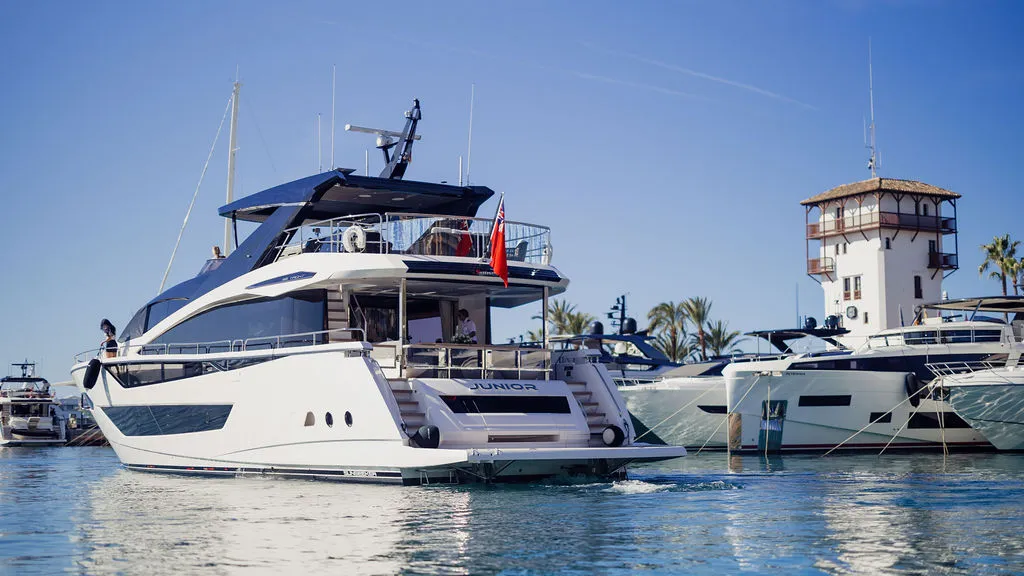
Mallorca has a berth problem — or, depending on your perspective, a berth tradition: the good moorings have been in firm hands for decades, new marinas are rarely built, and the official waiting lists for the Tier-1 ports are so long that, for many owners, they are effectively a non-starter. Anyone bringing a yacht here has to think differently: finding a berth on Mallorca is not a question of "what the online form says" — it is a question of relationships, timing, and the willingness to keep three or four ports in view at once.
This page is my attempt to make the island's berth market intelligible — and to show how I get my clients into berths that are officially not available.
Tier-1 marinas: the five that matter
Mallorca has more than twenty ports, but only five are genuinely relevant for demanding yachts:
- Puerto Portals — the established premium address since 1986. 670 berths, up to 60 m, ~€38/m/day in high season. My default for yachts 15–35 m.
- Port Adriano — the modern megayacht address, designed by Philippe Starck. 492 berths, up to 90 m, ~€42/m/day. First choice for yachts from 24 m up.
- Club de Mar — the megayacht address with a 700-tonne travel lift. 600 berths, up to 110 m, ~€45/m/day. First choice for yachts from 50 m up or for refit work.
- Puerto Andratx — the charming fishing-village harbour. 470 berths, up to 30 m, ~€22/m/day. First choice for owners who want island atmosphere.
- Real Club Náutico de Palma — the storied yacht club right in front of the cathedral. 830 berths, up to 90 m, ~€35/m/day. First choice for regatta owners and lovers of a city mooring.
You'll find a map of all the Tier-1 marinas and a direct comparison on /en/marinas.
For the two ports in highest demand I've written up the berth reality in detail — tariffs, lease-takeover sums and waiting-list strategy: Berth Puerto Portals and Berth Port Adriano.
Daily, seasonal or annual berth?
Three clearly separate models, each with its own trade-offs:
Daily berth: short-term (1–7 days), full high-season rate, the norm for charter guests or yachts in transit. Booked through the marina website or a direct call — availability is often only reliable 48–72 hours ahead.
Seasonal berth: typically April to October, often 30–40% cheaper than the equivalent daily-rate calculation. The best solution for owners who park their yacht elsewhere over winter (mainland, dry storage). Availability is better than for annual berths, but still limited.
Annual berth: 365 days, often 50% cheaper than the equivalent daily-rate calculation. This is the real premium product — and the bottleneck. Waiting lists at the Tier-1 marinas run two to five years. My route to an annual berth is a direct approach to the marina managers, the takeover of an existing lease, or a handover from owners who are selling their yacht.
Rule of thumb: if you use the yacht fewer than 80 days a year, a seasonal berth is often cheaper. If you treat the boat as a second home, take an annual berth — ideally on a multi-year contract.
On Mallorca, the bottleneck is not buying the yacht — it's the berth afterwards.
How I find berths for my clients
My approach is not magic — it rests on three mechanisms:
- Direct approach to the marina managers. A personal line to the harbour masters in all five Tier-1 marinas. Berths are not allocated solely through the waiting lists — when something comes free at short notice, what counts is who is reachable first.
- Yacht sales and berth takeovers. When an owner sells, the berth often goes with the boat. I usually know about these sales weeks or months before they reach the market — and can reserve the berth for one of my buyers before it officially becomes available.
- Local broker network. Other brokers have yachts without a berth and owners who no longer need theirs. We trade — informally, quickly, to mutual benefit.
This is not a guarantee for every yacht size in every marina — but it is far more effective than waiting on an official list.
Tier-2 marinas: the underrated alternatives
When the Tier-1 marinas aren't available or the budget is tight: Mallorca has five more ports that work well for yachts up to ~25 m — and run 30–50% cheaper than the premium addresses.
- Marina Moll Vell (Palma): an inner-city marina on the Avinguda Gabriel Roca, a five-minute walk from the cathedral, yachts 7–18 m. Mooring fees sit around 35% below the Real Club Náutico, at the cost of less privacy and no 24-hour security. Sensible for owners who want to be close to Palma and use the yacht mainly as a day boat.
- Puerto Sóller: west coast, framed by the Tramuntana mountain range. 270 berths, yachts up to 25 m, draft up to 4 m. Access is restricted for superyachts because of the narrow harbour entrance — whoever moors here wants calm and mountains. My tip: low-season berths are often available at short notice, because many owners only use Sóller from May to September.
- Cala d'Or: east coast, a sheltered cove setting, 580 berths. Ideal for yachts 10–22 m that need longer seasonal stays. About 25% cheaper than Tier-1, but 45 minutes by car from Palma — so not the choice if the owner lives permanently in the west.
- Porto Petro: east coast, south of Cala d'Or. Small (only ~150 berths), beautifully kept, almost familial. Yachts up to 18 m. The waiting lists are long, but berths come free regularly on owner changes. For anyone who wants discretion and no premium-marketing surroundings, this is the place.
- Pollença: the north, a bay setting opposite Cap Formentor. A good base for day trips to Menorca (a 3–4 hour crossing). 380 berths, yachts up to 20 m. A word of caution: in northerly Tramuntana weather the approach gets demanding — Pollença is a summer-only berth, not a year-round one.
These five ports are less visible in the international market but just as real as the Tier-1 addresses — and, for the right yacht-and-owner combination, often the better choice. I have at least one direct contact in each of these marinas; if you have a specific yacht in mind, I'll make the enquiry for you.
What I contribute
-
Direct line to every Tier-1 marina
A personal contact with the harbour masters in Portals, Adriano, Club de Mar, RCNP and Andratx.
-
Local broker network
Berths that are never officially advertised.
-
Multi-year contracts
Advice on seasonal vs. annual vs. multi-year contracts.
-
Tier-2 alternatives
When Tier-1 doesn't fit — five more options.
Frequently asked
Berth questions every owner asks
How much does a yacht berth on Mallorca cost in 2026?
How long is the wait for an annual berth?
Which marina suits which yacht size?
What is included in the berth price?
Is a berth cheaper in winter?
Further reading
Full marina overview with map: /en/marinas. Detail pages for the five Tier-1 marinas: Puerto Portals, Port Adriano, Club de Mar, Puerto Andratx, Real Club Náutico. If you'd like to buy a yacht: Buy a yacht on Mallorca.
— Julian Hoeke